For Ottawa homeowners planning a new fence, the choice often comes down to two classic wood options: the rich, aromatic Western Red Cedar and the rugged, budget-conscious pressure-treated pine. Deciding between them involves more than just the initial quote; it's about understanding the long-term value, durability, and aesthetic each material brings to your backyard sanctuary, especially in our demanding local climate. This guide will help you compare the true investment and performance of each, ensuring you make a choice that enhances your property for years to come.
Understanding the Basics: Pressure Treated vs. Cedar Fencing
Before diving into a direct comparison, it’s crucial to understand what makes these two materials fundamentally different. They may both be wood, but their origins and preparation create distinct advantages and disadvantages for an Ottawa backyard.
What is Pressure Treated Wood?
Pressure-treated (PT) wood is typically a common softwood, like Spruce, Pine, or Fir, that has been chemically treated to resist rot, decay, and insect infestation. During the manufacturing process, the wood is placed in a depressurized tank that removes the air from its cells, then infused with chemical preservatives under high pressure. This process, often using Alkaline Copper Quaternary (ACQ), is what gives PT lumber its signature green or brown tint and makes it a durable, cost-effective choice for outdoor construction. In a Canadian backyard, a professionally installed PT fence can offer reliable service for many years. (wood preservation techniques)
The Natural Advantage of Western Red Cedar
Western Red Cedar is a premium softwood that requires no chemical treatment. Its power comes from nature. The wood is rich in natural oils and tannins that act as preservatives, making it inherently resistant to moisture, decay, and insects. Beyond its durability, cedar is renowned for its dimensional stability, meaning it is far less likely to shrink, swell, twist, or warp when exposed to the dramatic temperature and humidity swings of an Ottawa season. For this reason, Western Red Cedar is the industry standard for high-end, beautiful, and long-lasting wood fencing in Canada.
Comparing the Initial Investment: Material and Labour
While homeowners are often focused on the material cost, the total project investment includes labour, hardware, and other factors that paint a more complete picture of the upfront commitment.
Upfront Material Investment
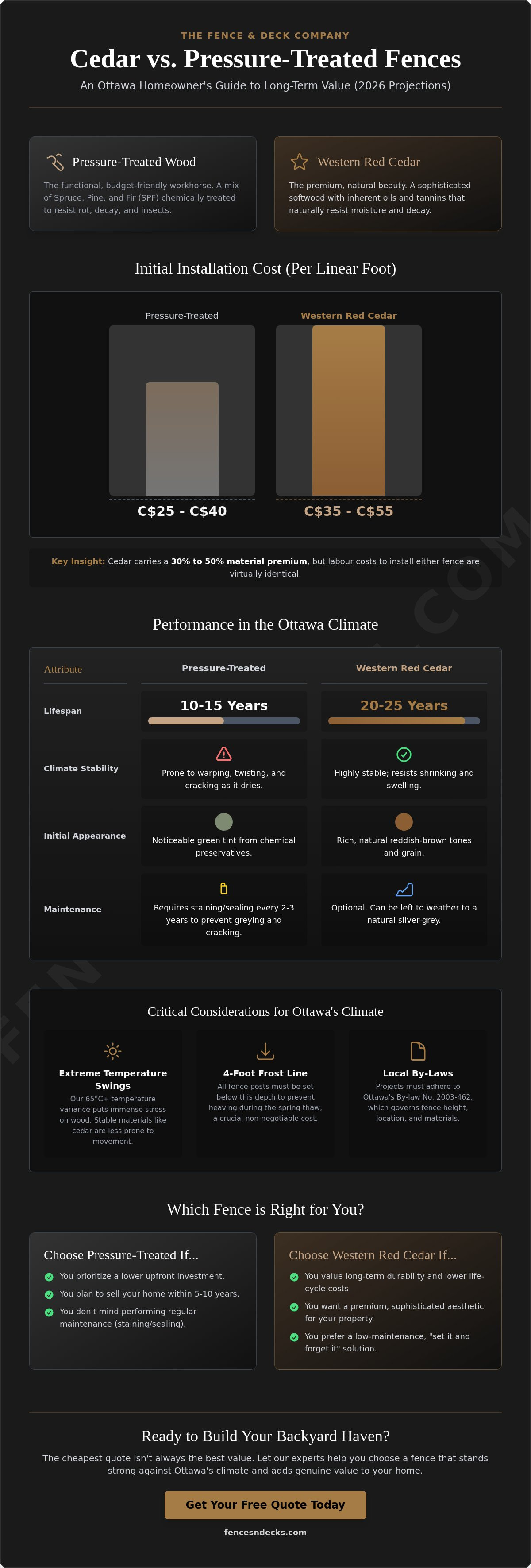
There is a clear distinction in the initial material investment between these two options. Pressure-treated wood is a commodity lumber, making it the more accessible and budget-friendly choice for homeowners. Western Red Cedar, with its natural durability and superior aesthetics, is positioned as a premium material, and its upfront cost reflects that quality. It's also worth noting that the market for PT lumber can be volatile, whereas cedar pricing tends to be more stable.
A common and effective strategy to balance these factors is to use pressure-treated posts, which provide excellent ground-contact durability, with cedar boards and railings for a premium look and feel.
Labour and Installation Parity
A critical point to understand is that the labour to build a fence is largely the same regardless of the material. A professional crew takes the same amount of time, skill, and care to dig post holes, set posts, and fasten boards whether they are working with PT pine or Western Red Cedar. Therefore, the investment in professional fence installation in Ottawa is based more on the project's length and complexity than the wood itself.
However, more intricate designs, such as those with horizontal boards or custom lattice tops, can amplify the investment difference, as these styles require more precision and material. This is why hiring the best deck builders in Ottawa—craftsmen who truly understand wood movement and high-quality construction—is essential for a fence that lasts.
Durability and Performance in the Ottawa Valley Climate
An Ottawa fence must endure punishing conditions, from humid +35°C summer days to frigid -30°C winter nights. This is where the structural differences between cedar and PT wood become most apparent.
The Freeze-Thaw Cycle and Wood Stability
The infamous freeze-thaw cycle is the ultimate test for any outdoor wood product. As moisture absorbed by the wood freezes, it expands, putting immense stress on the wood fibres. Cedar’s porous cell structure is better equipped to handle this expansion and contraction without compromising its shape. PT wood, being denser and often installed with a higher moisture content, is more prone to twisting, warping, and checking (forming long cracks) as it dries and weathers. This movement can affect the fence's structural integrity over time, especially impacting gate function and hinge alignment.
Aesthetics: The Silvering Process
If left unstained, both woods will naturally weather to a silvery-grey patina. However, the journey to that state differs. Cedar tends to weather gracefully, maintaining a smooth and refined texture. Pressure-treated wood, on the other hand, can become rougher as it ages, sometimes becoming splintery. For homeowners seeking to create a true "haven of beauty," the elegant aging process of cedar is a significant advantage, ensuring the backyard transformation remains visually appealing for its entire lifespan.
Maintenance Requirements and Life-Cycle Costs
A fence is a long-term addition to your home. Evaluating its cost over a 15-to-20-year period provides a clearer picture of its true value beyond the initial installation.
The Staining Debate: To Seal or Not to Seal?
To maintain the original colour of your wood fence and protect it from UV rays, staining or sealing is necessary. This is where the material differences again play a role.
- Cedar: Because of its natural stability and lower moisture content, cedar accepts stain beautifully and evenly. A high-quality, UV-protective stain applied to cedar will typically last longer, requiring re-application less frequently.
- Pressure-Treated: New PT wood must be allowed to dry completely before staining, a process that can take several months. The chemical treatment can sometimes interfere with stain absorption, leading to a less consistent finish. PT fences often require more frequent sealing to prevent splitting and checking.
In high-sun areas common in Orleans or Kanata, the frequency of re-application for either wood will be higher, making the ease of staining a key long-term consideration.
Long-term ROI and Property Value
A high-quality fence is an investment that can improve your home's curb appeal and resale value. In the Ottawa market, a beautiful, straight, and well-maintained Western Red Cedar fence is often perceived by potential buyers as a premium feature. It signals quality and attention to detail. While a PT fence is perfectly functional, a warped or cracked one can detract from a home's value. The typical life expectancy of a professionally installed cedar fence often exceeds that of a pressure-treated fence, making its value per year of service extremely competitive.
Making the Right Choice for Your Ottawa Property
Ultimately, the best fence material is the one that aligns with your budget, aesthetic goals, and long-term plans for your home.
- Choose Pressure-Treated Wood If: Your primary concern is the initial budget. It's a strong, durable choice for defining property lines, ensuring privacy, and is perfectly suitable for rental properties or if you don't plan to stay in your home long-term.
- Choose Western Red Cedar If: Aesthetics, stability, and long-term value are your top priorities. It's the ideal choice for "forever homes," high-visibility properties, and homeowners who want to create a stunning backyard oasis that adds significant property value.
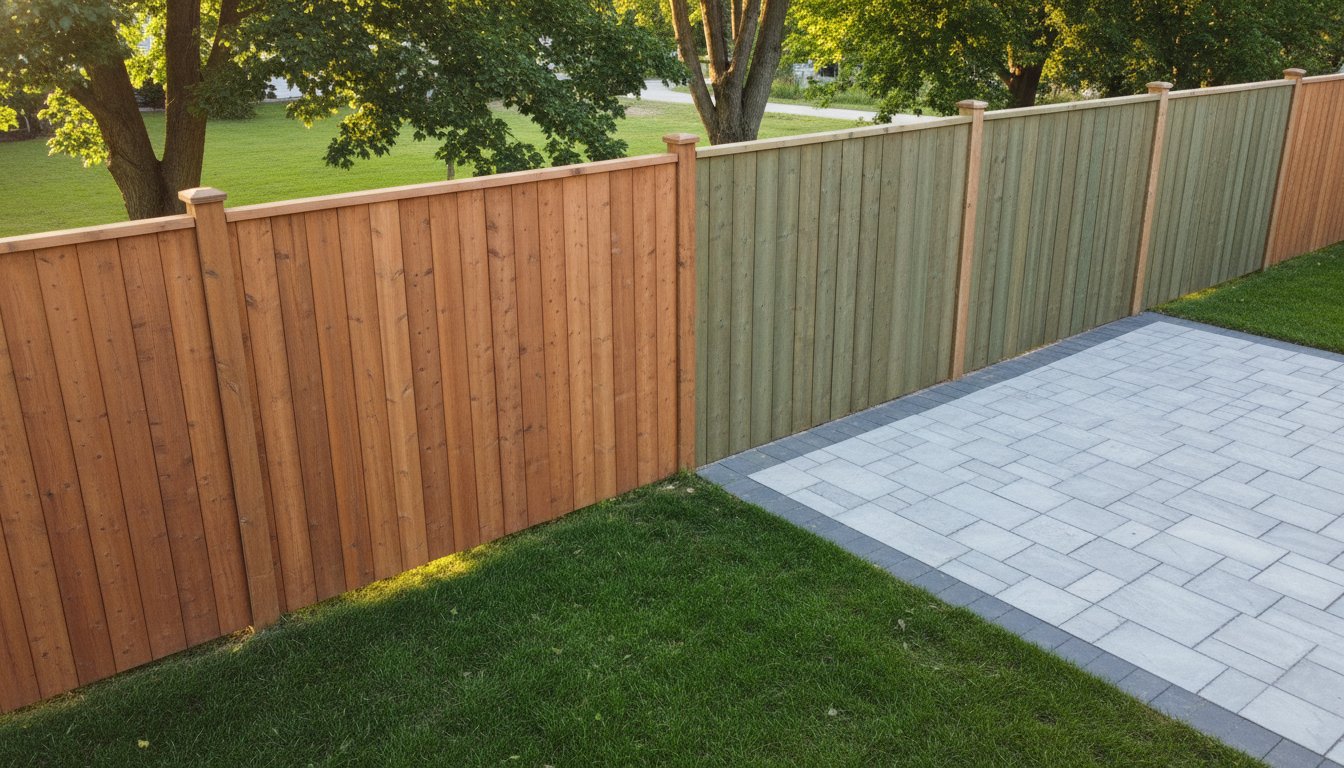
- Consider the Hybrid Approach: For the best of both worlds, use pressure-treated posts for their in-ground durability and pair them with cedar pickets, rails, and trim. This delivers the premium look and stability of cedar where it's most visible while managing the overall project investment.
Decision Matrix: Budget vs. Beauty
To help you decide, ask yourself these questions:
- Is my primary goal to meet a specific upfront budget, or to invest in long-term aesthetic value?
- How important is it that my fence remains perfectly straight and resists warping over the next 15+ years?
- What is the standard in my neighbourhood? Matching the local aesthetic (e.g., the custom builds of Richmond versus the established look of Rockcliffe) can impact property value.
Why Professional Installation Matters
Regardless of the material you choose, the quality of the installation is the single most important factor in your fence's longevity. At The Fence & Deck Company, we ensure every post is set correctly and every board is fastened with precision to withstand Ottawa's climate. The principles of high-performance construction we apply as expert PVC deck builders in Kanata—focusing on structural integrity and material science—are applied to every wood fence we build.
Ready to transform your backyard with a fence built to last? Request a professional fence quote today.
Frequently Asked Questions
Is cedar fencing really worth the extra cost in Ottawa?
For many homeowners, yes. Cedar's superior resistance to warping, twisting, and cracking in Ottawa's extreme freeze-thaw cycles means it maintains its beauty and structural integrity for longer. This longevity and lower maintenance need for repairs often translates to a better long-term value.
Why is cedar considered a more premium investment than pressure-treated wood?
Cedar's higher upfront material cost is due to its natural properties. It contains inherent oils that resist rot and insects without chemical treatment, and its dimensional stability is far superior to pressure-treated pine. This makes it a more reliable and aesthetically pleasing material for high-end projects.
Does pressure treated wood last longer than cedar in the ground?
Yes, for direct ground contact, pressure-treated wood is superior. The chemical preservatives provide excellent protection against rot and insects below the soil line. This is why using PT posts is the industry standard, even for high-end cedar fences.
Can I mix cedar boards with pressure treated posts to save money?
Absolutely. This "hybrid" approach is extremely popular and practical. It combines the ground-contact durability and lower cost of PT posts with the beauty, stability, and premium feel of cedar boards and rails.
How long do I have to wait before staining a new pressure treated fence?
You must wait for the wood to dry out completely, which can take anywhere from a few weeks to several months, depending on the weather. A good test is to sprinkle water on the surface; if it beads up, it's too wet to stain. If it soaks in, it's ready.
Will a cedar fence warp in the Ottawa humidity?
Western Red Cedar is one of the most warp-resistant woods available. Its low density and high dimensional stability mean it is minimally affected by moisture changes, staying straighter and flatter than other wood species in Ottawa's humid summers and dry winters.
What is the best type of cedar for fencing in Ontario?
Western Red Cedar is widely considered the gold standard for fencing in Ontario and across Canada due to its exceptional combination of natural beauty, durability, and stability.
Does a cedar fence increase my home’s resale value?
A well-built, well-maintained cedar fence can significantly increase a home's curb appeal and is often seen as a luxury feature by potential buyers, which can positively impact resale value. It signals a commitment to quality materials and craftsmanship.